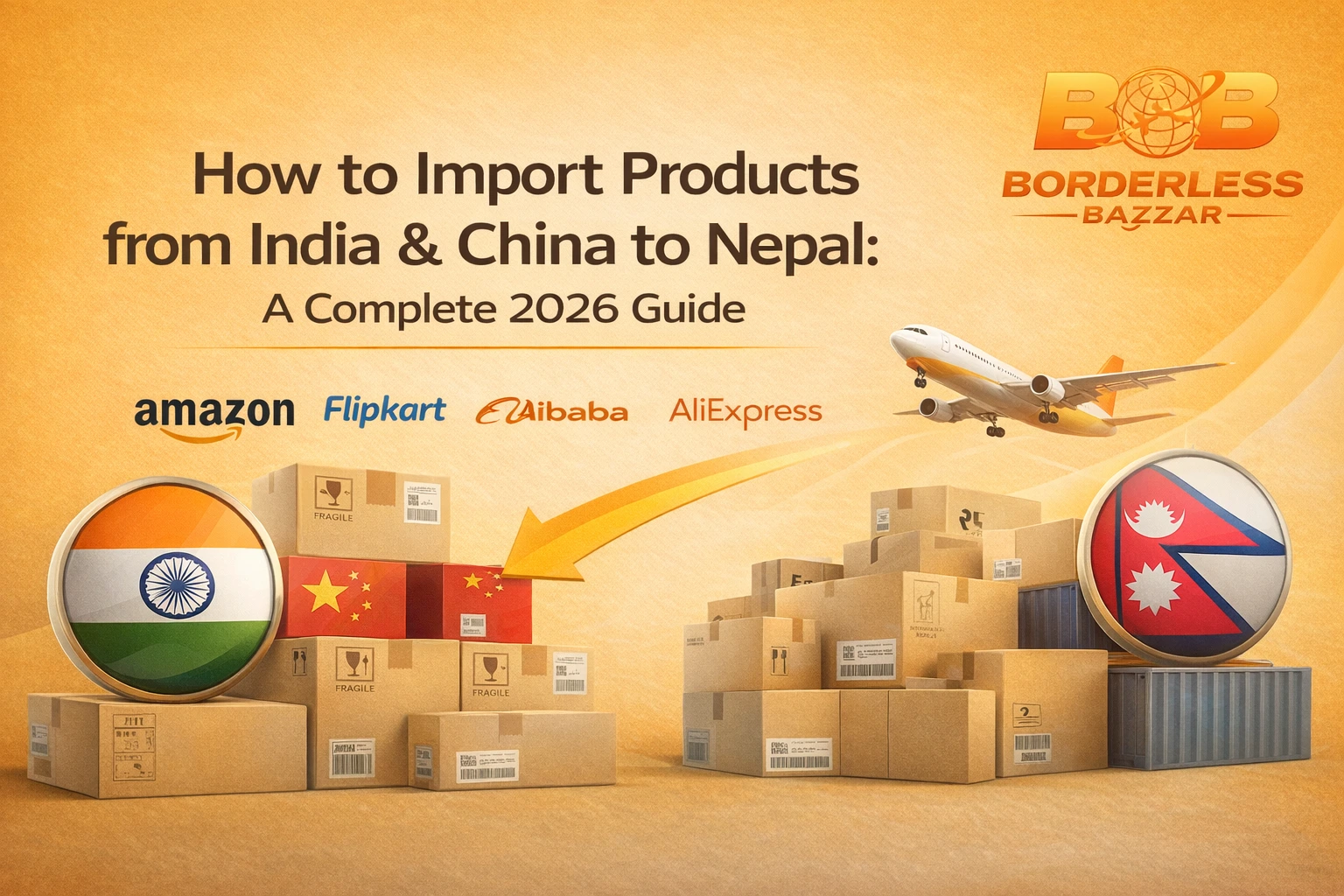
How to Import Products from India to Nepal: A Complete 2026 Guide
Importing products from India to Nepal is the backbone of the Nepali economy, providing access to everything from daily essentials to high-end fashion and electronics. However, for many individuals and new entrepreneurs, the process can seem like a maze of paperwork and border regulations. In 2026, with the digitalization of customs through systems like ASYCUDA, the process is faster than ever—if you know the steps.
Whether you are a business looking for raw materials or an individual wanting the latest products from Indian marketplaces, here is the definitive guide on how to import from India to Nepal successfully.
1. Understanding the Legal Requirements
Before you even place an order, you must ensure you have the right legal standing. For commercial imports, your business must be registered in Nepal with a valid PAN/VAT certificate. Most importantly, you need an EXIM Code (Export-Import Code) issued by the Department of Commerce, which is mandatory for all formal trade.
2. Essential Documentation Checklist
Proper documentation is the difference between a 3-day delivery and a 3-week delay at the border. In 2026, ensure you have these digital and physical copies ready:
Commercial Invoice: Must include the HS Code, quantity, and unit price in NPR, INR,RMB or USD.
Packing List: A detailed breakdown of the contents of each package.
Certificate of Origin (COO): Under SAFTA, a COO can often help you get preferential tariff rates on goods manufactured in India or China
Bill of Lading or Lorry Receipt (LR): Proof of the contract for carriage.
Customs Declaration Form (Pragyapan Patra): The official document submitted to Nepal Customs for tax assessment.
3. Navigating Customs and Taxes
When your goods reach the border (such as the Birgunj, Raxaul, or Bhairahawa Integrated Check Posts), they undergo a three-step tax assessment:
Customs Duty: Based on the CIF (Cost, Insurance, and Freight) value and the specific HS Code of the product.
Excise Duty: Applicable only to specific goods like vehicles or luxury items.
Value Added Tax (VAT): A standard 13% VAT is applied to the total value (CIF + Customs Duty + Excise).
4. The Logistics: Transporting Your Goods
Most imports from India come via road through major transit points. For 2026, land freight remains the most cost-effective method. However, for high-value or urgent items (like electronics or specialized machinery), air freight to Tribhuvan International Airport is a faster, albeit more expensive, alternative.
5. How to Simplify the Process with Borderless Bazzar
The biggest challenge for many is the payment bridge and customs clearance. If you don't have an Indian bank account or a dedicated customs agent, the process can stall. This is where Borderless Bazzar adds value:
Payment Assistance: We handle the INR payments to Indian suppliers so you can pay locally in NPR.
End-to-End Logistics: From the supplier's warehouse in India to your doorstep in Nepal, we manage the shipping and the border crossing.
Transparent Customs: We handle the Pragyapan Patra and duty payments, so you receive one single, "all-in" quote with no hidden surprises.
Summary: Pro-Tips for 2026 Importers
Verify HS Codes early: Mismatched codes are the #1 cause of fines.
Use Digital Tracking: Ensure your logistics partner uses real-time tracking for border transit.
Consolidate Shipments: If buying from multiple vendors, consolidate them into one shipment to save on base freight costs.
Ready to start sourcing? Don’t let the paperwork hold you back. At Borderless Bazzar, we make the India-Nepal border invisible for your business.
✔ Direct Sourcing
✔ Verified Documentation
✔ Fast Doorstep Delivery